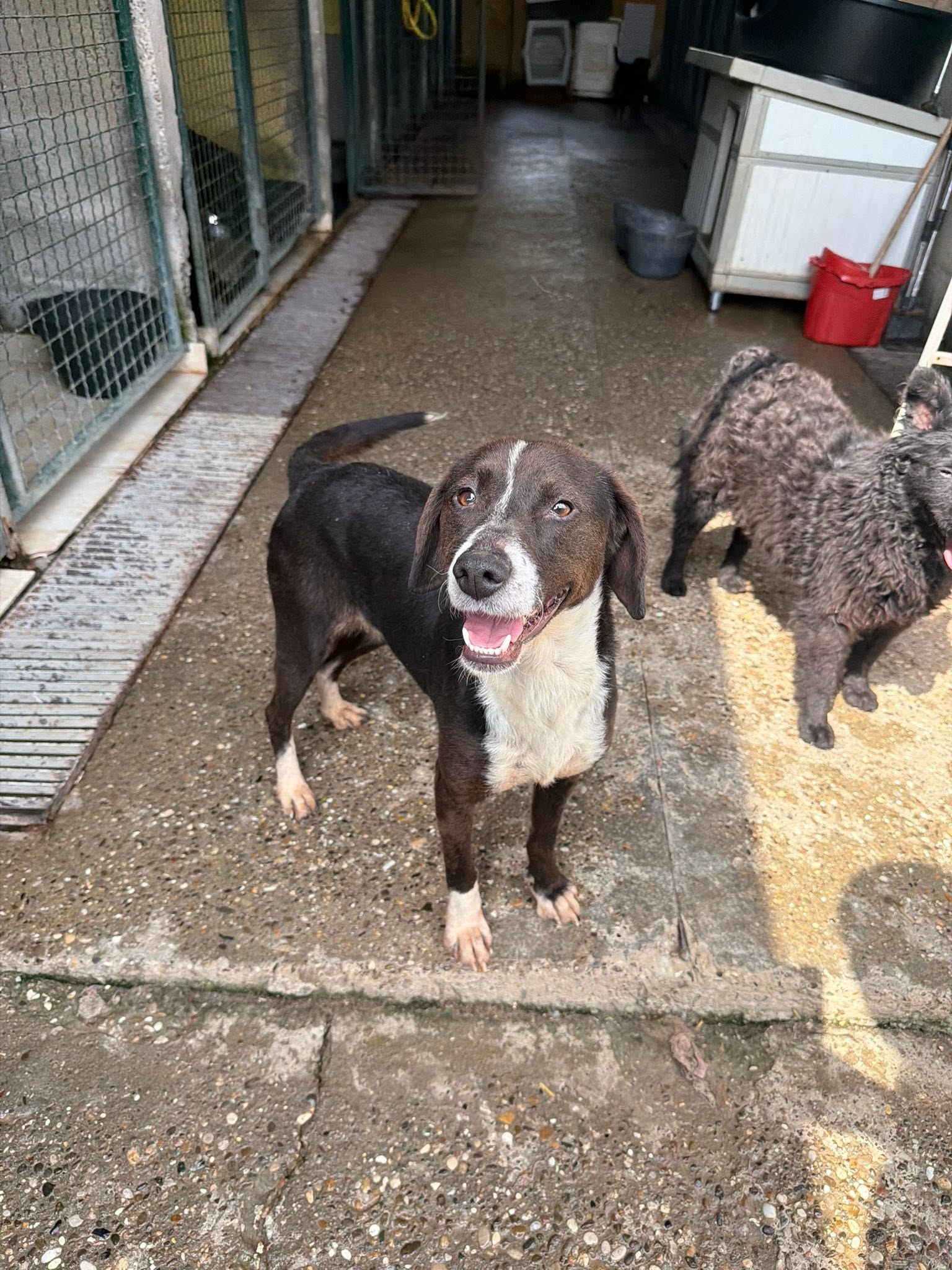
In our previous article, 'From the street to home: why adopt a dog from Bosnia?', we told more about the situation of street dogs and why so many dogs are looking for a safe home.
Behind every dog there is a story, but also a careful process before he is ready to travel to his new family.
In this article we take you step by step through how adoption works through Hope for Dogs: from the first introduction and medical preparation to the moment when your dog finally comes home.
Adopting a dog is a big decision. It is not just a matter of choosing a dog that you like, but above all seeing which dog really suits your life.
Every dog has its own character, past and needs. The cheerful young dog who wants to go everywhere may need a completely different family than the calm dog who first needs some time to build trust.
That is why we believe a good match is more important than a quick placement.
Our goal is not just for a dog to have a home.
Our goal is for a dog to find a home.
1. Orientation: which dog suits you?
The first step often simply starts with looking around.
On our website you will find dogs that are ready to start a new chapter. We share as much information as possible with each dog, such as:
- Photos
- Age
- Background
- What we know about the character
But of course a photo never tells the whole story.
A dog is more than a pair of pretty eyes on a screen.
That's why you can always ask questions. Are you unsure which dog suits your situation? Do you have children, other animals or little experience with dogs? Then we would be happy to think along with you.
Because we interact with our dogs every day, we know the character, habits and small quirks of most dogs well.
Yet extra interest in a specific dog can make just that difference. Sometimes it helps if someone from outside shines an extra light on a dog.
When someone shows serious interest, we can make more time to get to know that dog even better and to portray it. We take extra photos and videos, observe even more closely how a dog reacts and are happy to share more about the character behind that sweet face.
Because behind every dog there is its own story. And sometimes a dog just needs someone to make that story visible.
This way, dogs that may be less likely to stand out get the attention they deserve and together we increase their chance of finding their own home.
2. Introduction: finding the right match
When you are interested in a dog, the introduction begins.
We will send a questionnaire in which we would like to learn more about your situation. Not because there are right or wrong answers, but because we want to understand what your daily life looks like.
For example, we ask:
- How much time should the dog be alone?
- Do you have experience with dogs?
- What does your living environment look like?
- What do you expect from a dog?
- Are there children or other animals in the house?
We will then schedule a personal meeting. We will quietly get to know you, answer questions and see together whether this dog really suits you.
We also discuss all practical matters surrounding adoption, such as:
- The adoption fee
- The transportation
- The medical preparation
- What you can expect during and after the adoption process
Sometimes we discover together that another dog might be a better fit. And that's not a bad thing at all.
The best adoption is not the fastest adoption.
The best adoption is a match in which both people and dogs are happy.
3. Preparation before departure
When we feel together that there is a great match between you and the dog, the special wait for your new adventure begins.
Although the wait for your dog can sometimes feel endlessly long, a lot happens behind the scenes. We ensure that all preparations for transport are in order.
Every dog has its own path.
Many dogs are already medically prepared before they become available for adoption. Other dogs still have to go through certain steps. This varies per dog and is always tailor-made.
When there is time, our volunteers practice small steps that can help with the transition to a new life, such as:
- Walking on a leash
- Getting used to a harness
- Dealing with new situations
- Contact with people
- Getting used to household sounds
And of course we won't keep you in suspense.
While waiting, you will receive photos and videos of your dog, so that you can become part of his or her story.
You will also receive the reservation or adoption contract. This way, all agreements are clearly recorded and we can work together with confidence towards the day when you meet.
4. Transport: the day everyone looks forward to
Then finally comes the moment that has sometimes been prepared for months: the journey to the new home.
Our dogs travel with regulated transport.
Before departure, we create a group app in which we keep in touch and share updates. This way you know where your dog is and you can follow along step by step until the moment of arrival.
And then it happens.
The door opens.
After everything this dog has been through, a new chapter finally begins.
But our guidance does not stop there.
We remain available even after the adoption. Do you have any questions? Are you running into something? Would you like to discuss? We are here.
How long does the adoption process take?
Unfortunately there is no fixed time for this.
Every dog has its own story and every journey is different. The duration depends, among other things, on:
- The medical preparation
- The age of the dog
- Vaccinations and waiting times
- Available transportation options
- The personal situation of the dog
What we do promise: we will keep you informed throughout the entire process.
Do you have any questions or would you like to contact us quickly? We can usually be reached quickly via Messenger.
Medical preparation and documents
The health of our dogs always comes first.
Every dog that travels through Hope for Dogs is medically prepared and meets the requirements for transport.
This includes, among other things:
- Vaccinations against canine diseases and rabies
- Deworming
- Treatment against fleas and ticks
- A microchip according to European regulations
- A pet passport with all necessary information
- A health check by a veterinarian
Sterilization or castration
Many adult dogs have already been spayed or neutered before traveling. However, this is not included as standard in the adoption costs.
Whether a dog has already been helped varies per dog. Puppies are of course still too young for this procedure.
If a dog has not yet been helped, we look at the options together. If feasible, this can be done through us at a reduced rate of €60, or at a later time by the adopter himself.
Because every dog has its own story and medical background, customization remains important.
What can you expect from a street dog from Bosnia or Serbia?
A mutt doesn't start with an empty book.
He has already written chapters before he comes to you.
Maybe he had to look for food.
Maybe he never lived inside.
Maybe he learned that people can be unpredictable.
But that doesn't mean he can't give love.
On the contrary.
Many street dogs are extremely smart and observant. They have learned to quickly assess situations and adapt.
At the same time, that sometimes also means that they need time.
The first days and weeks
When your dog comes home, literally everything changes.
New scents.
New sounds.
A house.
A basket.
People who suddenly say:
“You stay here.”
For some dogs that is immediately great. They walk around curiously and seem as if they have always been home.
Other dogs need more time.
They might crawl away.
They do not yet understand the purpose of a bank.
They don't know what a toy is.
They must discover that they are safe.
Both reactions are normal.
Above all, give your dog time, rest and predictability.
You don't have to learn everything right away.
Your dog's first job is not to listen.
Your dog's first job is to trust.
Read our article 'Street dog in the house: the first weeks' more about the first period after adoption.
Toilet training, walking and getting used to it
Many former street dogs are not used to life as we know it.
A belt can be strange.
A busy street can be overwhelming.
A house with a television, vacuum cleaner and visitors can provide many new stimuli.
Cleanliness is also not always self-evident.
Not because a dog is disobedient, but because no one has ever taught him how indoor life works.
With patience, structure and positive guidance, most dogs make enormous progress.
Some within a few days.
Others need months.
Every dog has its own pace.
And that pace is impressive.
The first weeks at home: our most important tips
Give your dog a safe place
Your own basket or crate in a quiet place gives your dog a place to retreat.
Respect that place.
He doesn't need anything there for a while.
Keep the world small
Your dog does not have to meet everyone in the first few weeks.
No busy birthdays.
No full dog pastures.
No endless visits.
First you get to know each other.
A secure base is more important than discovering everything at once.
Build up walks slowly
Start with short and gentle walks.
Let your dog get used to all new smells and sounds.
A walk is not just about logging miles. For a new dog, every bush, car and cyclist is a new experience.
Be patient with toilet training
Go outside regularly.
Reward desired behavior.
Don't punish accidents.
Your dog isn't trying to be difficult. He simply learns something completely new.
Always use safe harness
A well-fitting anti-escape harness is one of the most important things for a new mutt.
Many dogs can be startled by unfamiliar sounds or situations. This allows them to slip backwards out of a regular collar or a standard harness.
That is why we always recommend a safe 3-point harness during the first period.
We can provide a suitable harness for the adoption for a fee. You only have to provide a suitable leash or leash yourself.
In this way we want to ensure that every adopter starts safely and well prepared.
We will also stay there after the adoption
Adopting a dog is an adventure.
A wonderful adventure.
But sometimes also an adventure with challenges.
That is why we are also there for you after the adoption.
Our volunteers have experience with street dogs themselves and understand that not every step comes naturally.
A question.
An uncertain moment.
A situation that makes you think:
“Am I doing this right?”
You can always contact us.
Because saving a dog doesn't just mean making sure it leaves. It also means making sure he really comes home.
Your role in the bigger story
Behind every dog is a whole chain of people.
The volunteer who found him.
The person who took care of him.
The vet who helped him.
The transport team that brought him to safety.
And ultimately you.
The person who opens the door.
Put down a basket.
Gives a name.
And says:
“You never have to leave again.”
Adopting a dog from Bosnia or Serbia means more than bringing an animal into your home.
You give a dog a future.
But you also help contribute to a bigger story.
Because every adoption makes space.
Space for the next dog that needs help.
Do you want to help, but is adoption not yet possible? Sharing, donating or making our stories visible also helps enormously.
This way we reach people who might be the ones to give a dog its second chance.
And maybe…Maybe your future buddy is among them. 🍀